D1: Management of Riparian Planting and Invasive Plant Removal*

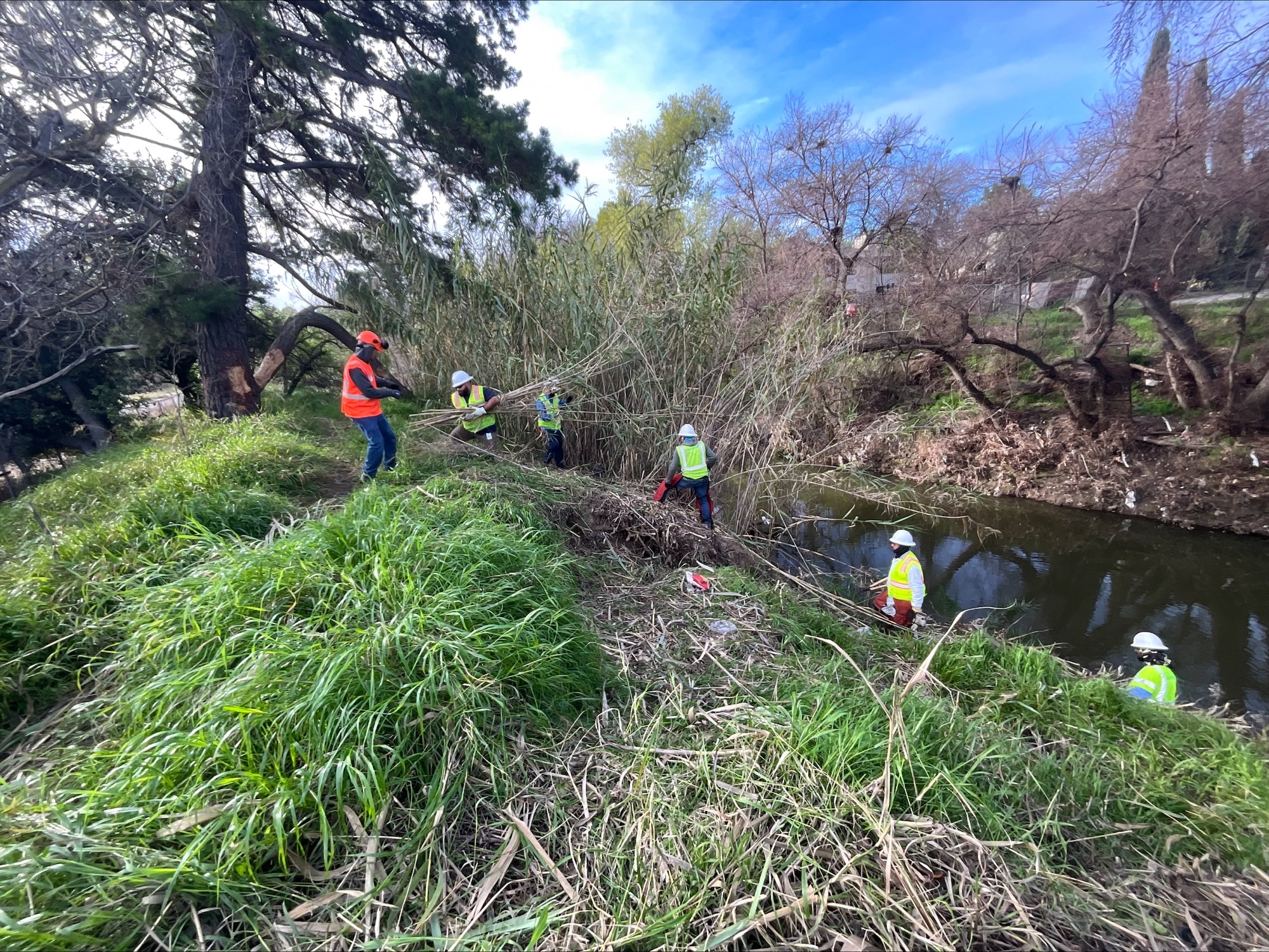
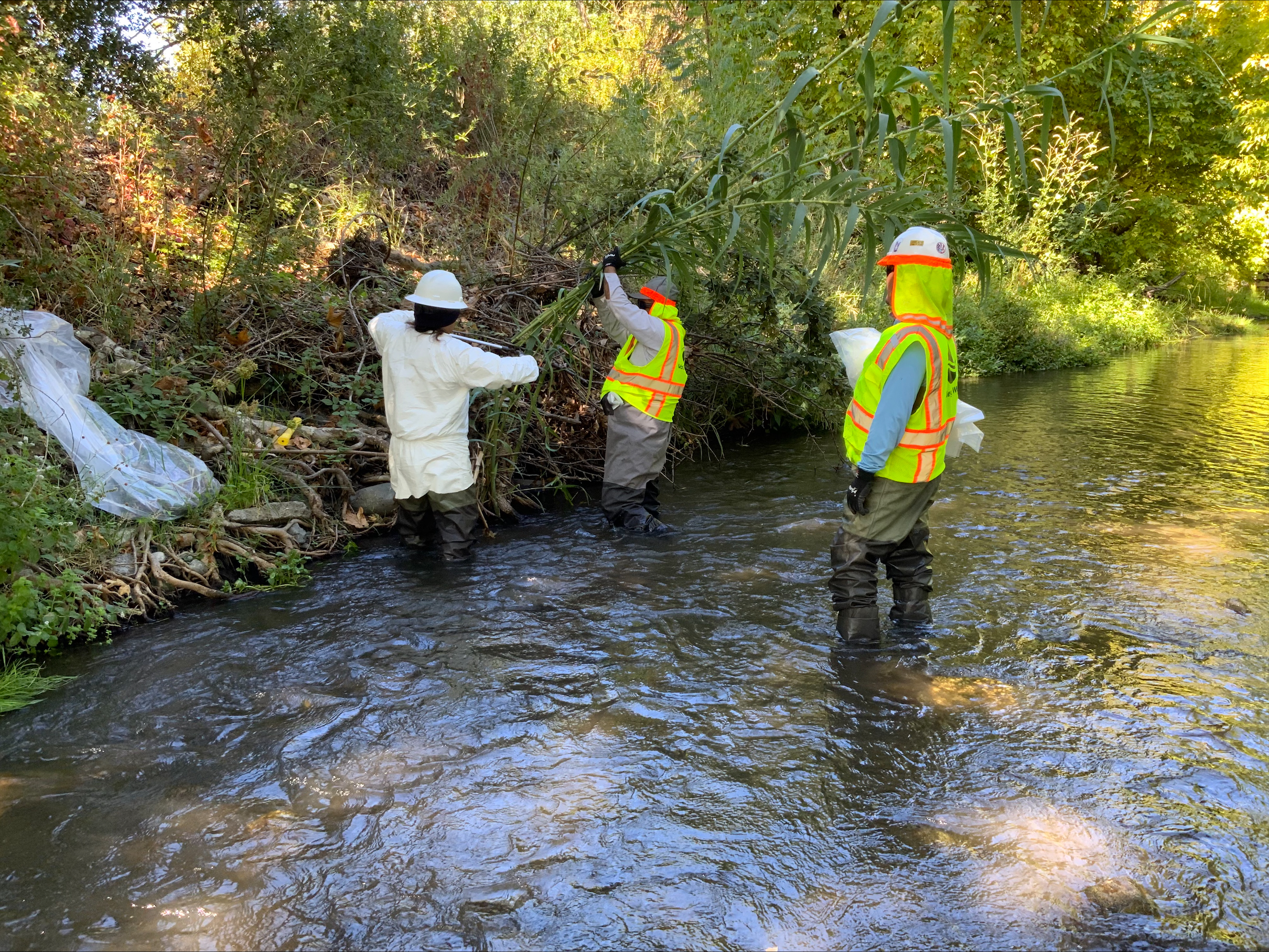
This project supports Valley Water management of at least 300 acres of existing riparian planting projects and 200 acres of invasive plant removal projects throughout the five (5) watersheds. The project also funds maintenance of future riparian planting and invasive plant removal sites, which are anticipated as part of upcoming environmental mitigation requirements. Funding for this project ensures that all required riparian planting and invasive plant removal projects are maintained as functional habitat that can support wildlife. In addition, this project includes targeted control of especially damaging non-native, invasive plant species, such as Arundo donax, throughout the county.
Climate change has increased temperatures and lengthened growing seasons, which facilitates the spread of non-native invasive vegetation by allowing it to establish early in spring before native species, thus transforming ecosystems.
Riparian planting aims to reestablish native California plant species, combating habitat loss and fragmentation from urban development and sprawl. Carefully selected perennial plants, which can thrive for decades, aid in climate change mitigation by producing oxygen and absorbing and storing carbon in various forms. The shade provided by mature trees helps to moderate the urban heat island effect, reducing the need for additional energy sources to keep us comfortable. Invasive plant control targets non-native species, often less tolerant to climate extremes like flooding and droughts. These species can hinder the reestablishment of native plants after such disturbances and can diminish forest carbon storage capacity. Invasive plants also tend to form dense monospecific thickets, increasing the risk of more frequent and severe wildfires. Management of riparian planting and invasive plant removal helps prevent the spread of non-native species, making the natural habitat less vulnerable and more resilient to climate change. Furthermore, restoring habitats that are damaged during regular operations is an important component of sustainable stewardship to protect nearby natural areas. It helps improve native habitat.
See Environmental & Community Benefits section for complete description of Key Performance Indicators (KPIs).
KPI #1: (Maintain riparian planting projects)
- A total of 86.13 acres of riparian planting projects were maintained at 26 sites in FY26 Q1 (July 1, 2025 – September 30, 2025):
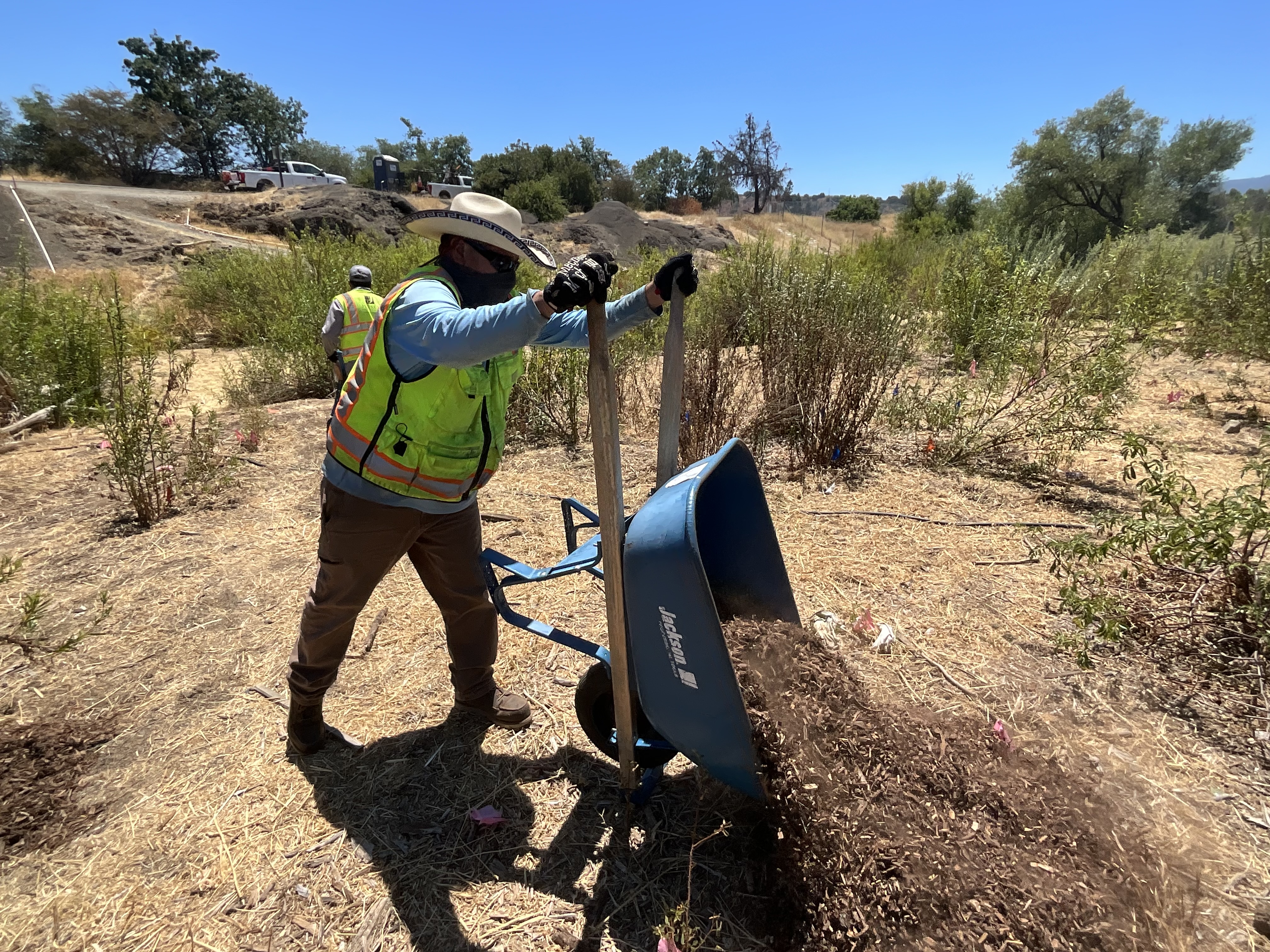
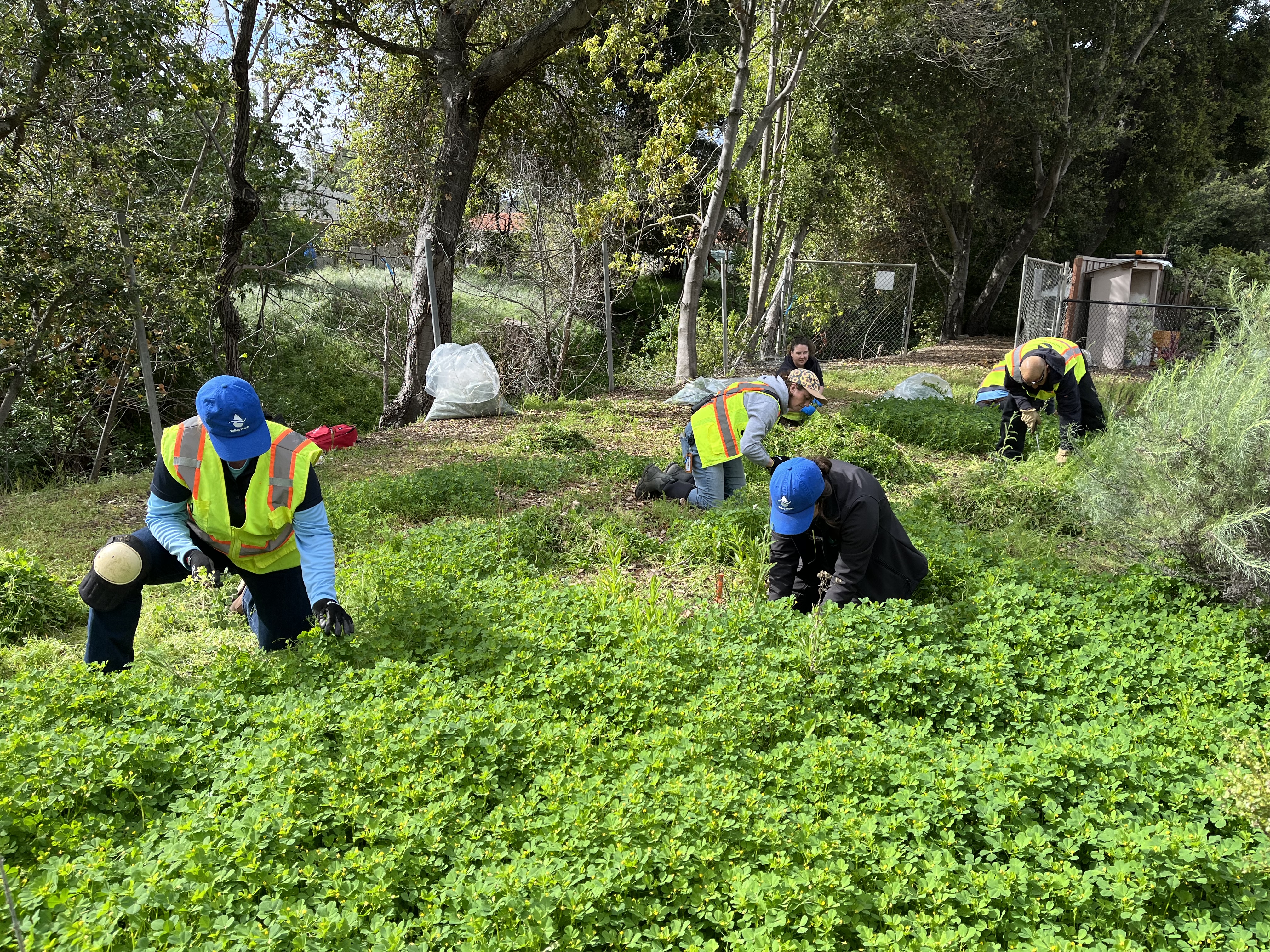
- Active Sites – 25 Active planting sites were revisited and maintained during FY26 Q1. Active sites are routinely maintained, inspected bi-monthly, mowed a minimum of once a summer, weeded regularly in-between basins, and new plantings are watered twice a month.
- Legacy Sites – 1 Legacy planting site was maintained during FY26 Q1. Legacy sites are inspected annually. Maintenance is performed as needed, such as invasive plant management, removal of dead brush, and pruning.
KPI #2: (Maintain invasive plant management projects)
- 292 acres of invasive plant management projects were maintained at 14 sites in FY26 Q1 (July 1, 2025 – September 30, 2025).
KPI #3: (Remove Arundo donax)
- 0.47 acre of Arundo donax was removed at 5 sites in FY26 Q1 (July 1, 2025 – September 30, 2025).
October 2025
For more information:
- Rebecca Wolff, (408) 630-2386